
“I definitely have always had somewhat of an abundance mindset in the sense that I’m very competitive, but I don’t need you to lose for me to win.” – Uriah Guilford
Scan any therapists’ forum and you’ll discover that the operational strategies that group practices have relied on no longer work. Could organizing principles like collaboratives, collectives, and cooperatives offer group practices new ways to thrive?
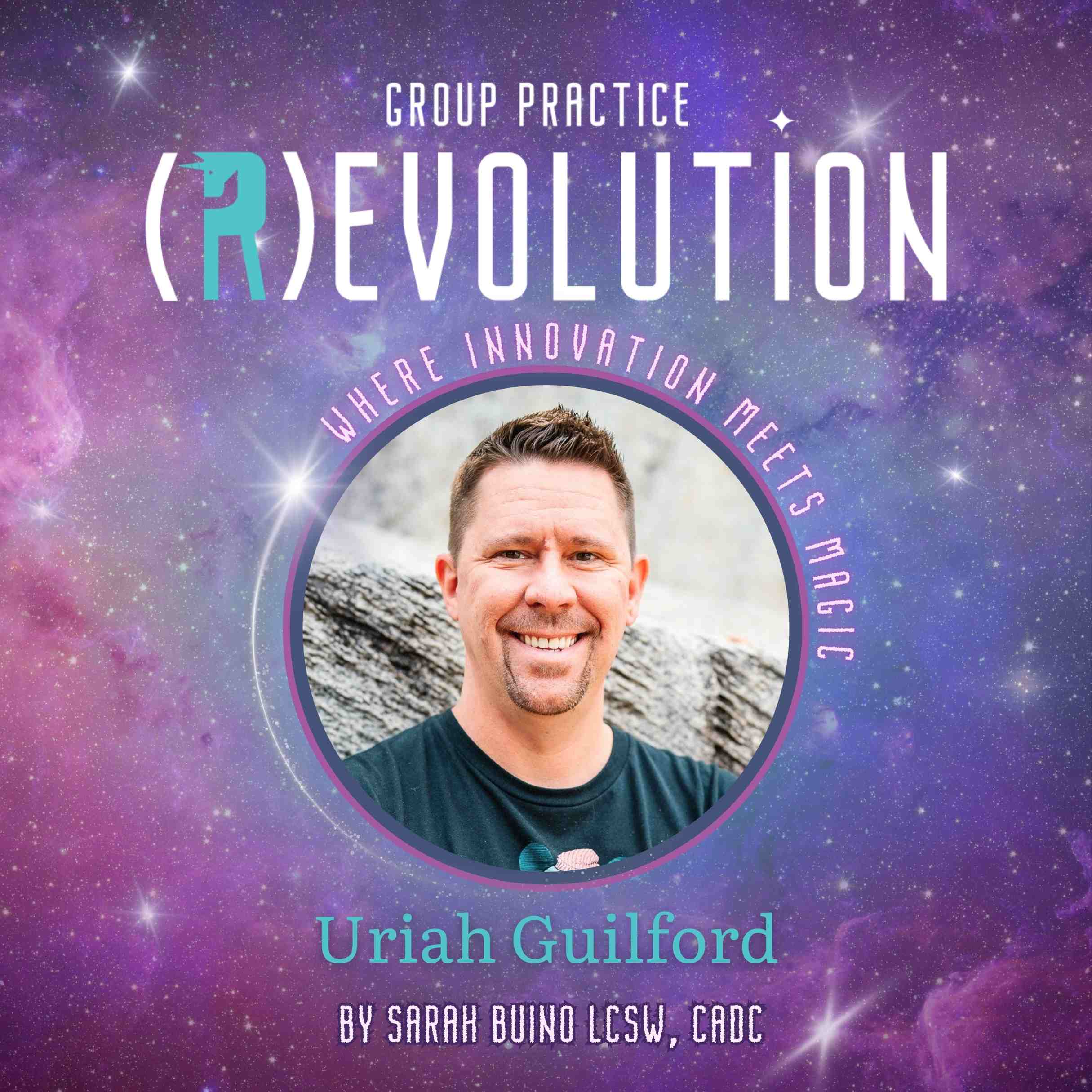
Uriah Guilford, MFT, thinks so! He has had success bucking the industry’s tried-and-true practice model. “Most group practice owners are taught to hold onto all your employees for as long as you can, and get the most out of ’em that you can,” Uriah says. “I was like, what if I don’t do that?”
Enter the therapy collaborative. Uriah’s evolution from traditional group practice owner to collaborative model speaks to his willingness to take on risks within reason. “I think the through-line for me (besides needing to make money to support my family) was I discovered a passion and desire to help therapists reach their goals,” he explains.
This is a good time to note that collaborative, collective, and cooperative are not interchangeable terms. A collaborative (like Uriah’s) is a loose partnership that shares resources and goals without forming a single legal entity. The purpose is to coordinate efforts and shared learning or services while maintaining independent operations.
Admittedly, there isn’t a huge profit margin in collaboratives. Uriah maintains additional revenue streams to supplement his income and satisfy his entrepreneurial spirit. He’s an author, a podcaster and Head Nerd at Productive Therapist, a virtual assistant company that serves private practice therapists. supplement his income and satisfy his entrepreneurial spirit.
A cooperative is a legally recognized business owned and democratically governed by its members who also benefit from its services or profits. It’s structured as a formal democratic legal entity with bylaws and elected leadership. Think: one member, one vote.
Then there’s the collective, a values-based non-hierarchical group. Its members share decision making responsibilities equally and often reject traditional leadership styles. Collectives emphasize shared power and equity with a focus on social change, creative work, mutual support, or prioritizing solidarity over profit.
There’s no right or wrong option here. “If we can find ways to creatively provide services and create spaces for therapists to thrive,” says Uriah, “that seems like a good template.”
MENTIONED IN THIS EPISODE
Bill Gates on AI and Innovation
Same As Ever: A Guide To What Never Changes
RECOMMENDED EPISODES
CWH: Ted Rau, Part 1 – Leading Therapy Practices to a New Future Through Collective Governance
CWH: Ted Rau, Part 2 – Snap Out of Cynicism and Ignite a Glimmer of Hope!
GUEST CONTACT & BIO
Uriah Guilford, MFT, is a licensed therapist and a group practice owner. He’s also the author of The Productive Practice book and the Head Nerd at Productive Therapist, a virtual assistant company that serves therapists in private practice. He’s a technology nerd, a minimalist travel packer, and a rock drummer.
Join the Group Practice (R)evolution! GPR is a new platform and podcast series offering insights from owners, employees, and experts, and resources to support this wildly ambitious vision for the future. For a limited time, podcast listeners can get a full year of membership for only $19.99 by using the discount code PODCAST.
Visit: https://tinyurl.com/GPRPodcast and click on “have a coupon” and enter PODCAST to enjoy all the perks of Group Practice (R)evolution for a year!
Get Support! Earn CEs!
- Care in Chaos: https://tinyurl.com/CareInChaosRec
- Bridging Heart and Practice: https://tinyurl.com/TheSarahsOnlineSupe
SUPPORT THE SHOW
Conversations With a Wounded Healer Merch
Join our Patreon for gifts & perks
Shop our Bookshop.org store and support local booksellers
Share a rating & review on Apple Podcasts
***
Let’s be friends! You can find me in the following places…